Learning from the Masters – The Japanese approach to song structure

Those who truly improve at their craft don’t fall into the trap of repeating their strengths or practicing what they are good at. Masters lean into their weaknesses and constantly improve upon them. I confess, I have neglected song structure and composition for it has not been my strength or area of interest in the process. Therefore, I wanted to take a new approach to this area of songwriting and composition.

I was inspired after reading Robert Greene’s book on Mastery and the Walter Isaacson biography of Leonardo da Vinci – the value of an apprenticeship, and eventually internalization and individual adaptation of the work to your own.

Relating it to Japanese, there’s a concept called 守破離 (Shu-Ha-Ri), which consists of three kanji: 守 (Shu) meaning ‘to protect’ or ‘to follow,’ 破 (Ha) meaning ‘to break’ or ‘to diverge,’ and 離 (Ri) meaning ‘to separate’ or ‘to transcend.’ This describes the stages of learning: first by imitating the masters (守), then breaking away (破), and finally achieving personal expression (離). This method is relevant for musicians, especially when analyzing song structure to improve their own compositions. By studying how great songs are built, we can better understand why they work and apply those principles in new ways.

I will break down the structure and chord progressions of three songs: “Here Comes the Sun” by The Beatles, “I Feel Love” by Donna Summer, and “Jesus of Suburbia” by Green Day. Each represents a different style; but they follow fundamental songwriting principles that I hope to learn from.


1. Here Comes the Sun – The Beatles (Classic Rock/Pop Structure)

Song Structure:

  • Intro: Acoustic guitar riff
  • Verse 1: Soft vocals, building instrumentation
  • Chorus: Uplifting with harmonized vocals
  • Verse 2: Variations in melody and instrumentation
  • Bridge: Dynamic contrast
  • Chorus: Return to main uplifting theme
  • Outro: Repeats motif, fades out

Chord Progression:

  • Verse: | D | G | A | D |
  • Chorus: | G | A | D | G | A | D |
  • Bridge: | Bm | E | A | D |

** Variations:**

  • The song modulates between different keys, creating a sense of movement.
  • The iconic D–G–A progression is common in folk/pop and creates a bright, open sound.
  • The bridge introduces Bm and E, adding emotional contrast.

Key Takeaways:

  • The use of major chords and melodic movement creates a feeling of hope. The sun will rise again I suppose…
  • The structure is simple but effective, with dynamic variations. Simple is usually best. Dynamics are a long-forgotten motif in modern music, more on that later.
  • The intro motif returns throughout, reinforcing familiarity. Repetition works because it reinforces musical ideas, making them memorable and emotionally impactful.

2. I Feel Love – Donna Summer (Classic Dance/Deep House)

Song Structure:

  • Intro: Synth arpeggio loop
  • Verse 1: Ethereal vocals over simple beat
  • Chorus: Repeated vocal hook with layered synths
  • Verse 2: Minor variations to maintain interest
  • Breakdown: Stripped-down moment before build-up
  • Outro: Fades with looping arpeggio

Chord Progression:

  • Repeating pattern: | C | G | F |

Variations:

  • The C–G–F progression is looped throughout, with variations in arrangement and dynamics.
  • The synth arpeggios create harmonic movement without changing chords.
  • Subtle layering and automation prevent repetition from feeling stagnant.

Key Takeaways:

  • Repetitive structures work if layers evolve over time. Put the dancefloor in a trance, but don’t lull them to sleep.
  • Simple chord progressions can be effective in dance music. Again, simple is better for most pop or dance tracks.
  • The interplay between rhythm and melody is crucial. This is harder to make concrete, time and experience will lead to better production and composition decisions.

3. Jesus of Suburbia – Green Day (Multi-Section Rock Epic)

Song Structure:

This song is a suite with five distinct sections:

  1. “Jesus of Suburbia” – Anthemic opening
  2. “City of the Damned” – Darker tone, new chord progression
  3. “I Don’t Care” – Aggressive punk energy
  4. “Dearly Beloved” – Melodic contrast, piano-driven
  5. “Tales of Another Broken Home” – Climax and resolution

Chord ProgressionSimplified Version (Main Themes):

  • Part 1: | G | D | Em | C |
  • Part 2: | C | G | D | Em |
  • Part 3: | D | A | Bm | G |
  • Part 4: | C | F | G | C |
  • Part 5: | G | D | C | G |

Variations:

  • Each section modulates slightly, reflecting the emotional shifts.
  • Some sections use power chords, emphasizing a punk rock feel, but also eliminating overtones which brings the attention back to the vocals and story of the lyrics.
  • The transition between parts creates an evolving story. It’s a 9-minute song, but does it feel long?

Key Takeaways:

  • A song can tell a story through structure.
  • Changing keys and tempos can make long songs engaging. Harder to implement unless you record with a live band, but this is common in many famous rock tunes like ‘Gimme Shelter’ and even some disco tracks. The tempo increases with energy and vice versa.
  • Dynamic movements within a song can create a cinematic experience. Many modern productions tend to overlook the importance of dynamic range. Have we forgotten about loudness contrast?

Applying this concept to your favorite music and songwriting process

  • Study the structure of songs you admire. Learn their patterns.
  • Experiment with variations. Use similar progressions but change instrumentation or tempo.
  • Keep dynamics in mind. Build tension and release to maintain listener interest.
  • Think in movements. Even in short songs, sections should feel distinct but connected.

Begin with 守 – Shu, copying existing structures.

Gradually reach 破 – Ha, modifying them to preference.

Arrive at 離 – Ri, re-create something totally unique.

Learning from the masters is a crucial step along the path to mastering your own sound.

Optimizing Mic Performance: Mastering Polar Patterns for Recording

In preparation for a grand piano and cello recording session I decided it was time to invest in a studio quality microphone. My local music shop had a B-stock of the AKG C414 XLII on deep discount and I quickly swapped my hard-earned cash for this utility knife of a mic.

The C414 is a condenser microphone with nine selectable polar patterns, three attenuation levels (-6/-12/-18dB), and three bass cut filters. Options are great… but if you’re like me and a bit of a luddite, you might not know which polar patterns work best for different instruments or environments.

To help make sense of these options and what to expect from each polar pattern, I’ll outline the basics here. Then we can get back to recording, even if it’s not perfect, and justify the results with “nobody will sound like me now!” Rules are meant to be broken…maybe we should learn them first? Let’s dive in.

What is a polar pattern?

A polar pattern, also known as a pickup pattern, describes a mic’s sensitivity to sound from various angles or directions. It outlines how well the mic captures sound waves from different directions.

Omnidirectional

360-Degree Pickup: Captures sound evenly from all directions with equal sensitivity.

No Directional Aiming: Doesn’t need to be pointed in a specific direction but can’t be aimed away from unwanted noise, reducing headroom for feedback.

Natural Sound: Delivers the flattest frequency response and best bass response, providing a natural and balanced sound.

Low Sensitivity to Noise: Least sensitive to wind sounds and handling noise.

Ideal for Studio Use: Perfect for studio recording and capturing acoustic instruments or wide sound sources like choirs and orchestras.

Less Suitable for Live Shows: Not ideal for live performances due to its inability to isolate specific sounds.

Cardioid

Heart-Shaped Pickup Pattern: It captures sound primarily from the front, with reduced sensitivity to the sides and minimal pickup from the rear. This heart-shaped pattern gives it its name

Noise Isolation: Effectively isolates the mic from unwanted room or ambient noise, making it ideal for focusing on a single sound source.

Feedback Resistance: Offers increased resistance to feedback compared to omnidirectional microphones, especially useful in loud live environments.

Proximity Effect: Enhances bass frequencies when the sound source is close, adding warmth to vocals and instruments.

X/Y Stereo Technique: Two cardioid mics positioned at a 90-degree angle create the X/Y stereo technique, which provides dedicated left and right recording for stereo sound.

Moderate Sensitivity to Handling Noise: While it isolates sound well, it is more sensitive to handling noise and wind than omnidirectional mics.

Common Uses: Perfect for vocal recordings, live performances, podcasting, and close-miking instruments like guitars and drums.

Wide Cardioid (Also referred to as Subcardioid)

Broader Pickup Pattern: The wide cardioid has a larger pickup area than a standard cardioid, capturing more sound from the sides while still rejecting sound from the rear.

Balance Between Isolation and Ambience: It offers a balance between the focused directionality of a cardioid and the open, ambient capture of an omnidirectional mic, making it suitable for capturing a more natural sound with some isolation.

Less Proximity Effect: Compared to a standard cardioid, the wide cardioid has a less pronounced proximity effect, resulting in more natural bass response when close to the sound source.

Moderate Feedback Resistance: Provides good feedback resistance, though slightly less than a standard cardioid due to its wider pickup pattern.

Ideal for Acoustic Instruments and Ensembles: Works well for recording acoustic instruments, ensembles, or situations where a bit of room sound is desired along with the direct sound.

Versatile Use: Suitable for both studio and live settings where some ambient sound is beneficial, yet some isolation is still needed.

Hyper Cardioid

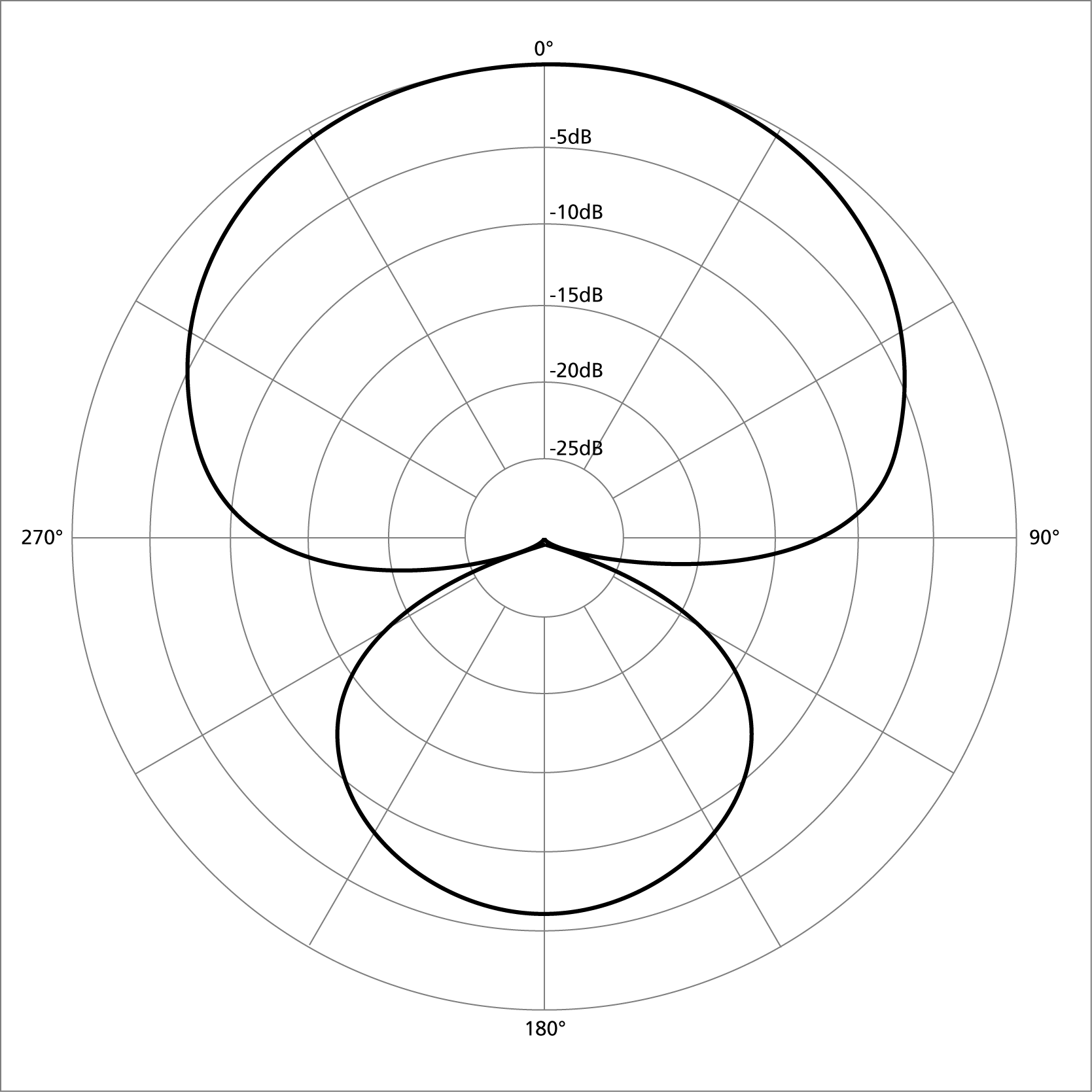
Tighter Pickup Pattern: The hypercardioid has an even more focused pickup pattern than a standard cardioid, capturing sound primarily from the front with a narrow angle of sensitivity.

Greater Isolation: It provides excellent isolation of the desired sound source, making it ideal for environments with a lot of background noise or when you need to focus tightly on a specific sound.

Small Rear Pickup: Unlike the cardioid, the hypercardioid has a small lobe of sensitivity at the rear, meaning it picks up some sound from directly behind the microphone, though much less than from the front.

Stronger Proximity Effect: The hypercardioid exhibits a more pronounced proximity effect, enhancing bass frequencies when the sound source is very close to the mic, which can add depth or warmth to recordings.

High Feedback Resistance: It offers good resistance to feedback, especially from the sides, but is slightly more prone to rear feedback due to the rear lobe.

Ideal for Noisy Environments: It’s well-suited for recording in loud environments, live performances, or when you need to isolate one sound source from others.

Common Uses: Frequently used in situations requiring focused sound capture, such as film, theater, and broadcast, as well as close-miking individual instruments or vocals in a noisy setting.

Figure-eight (bi-directional)

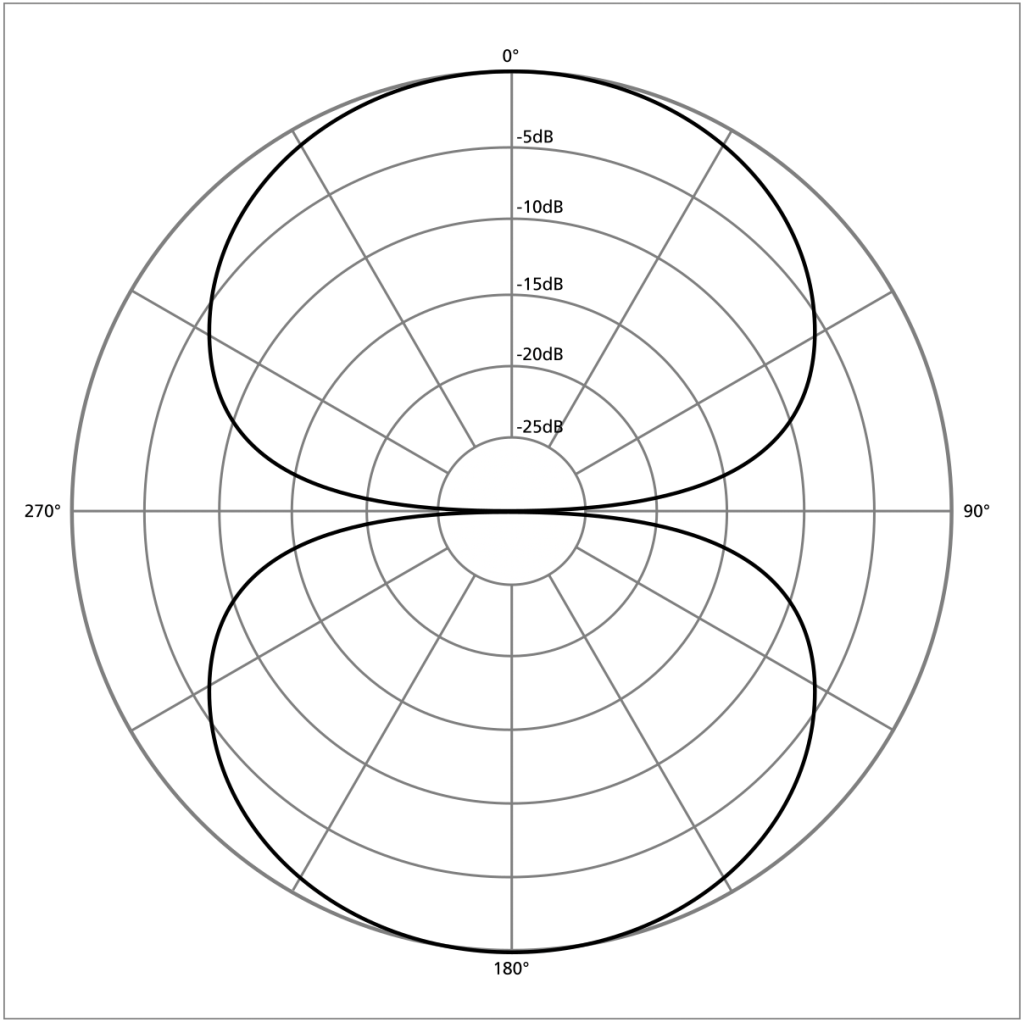
Two-Way Pickup Pattern: The figure-eight pattern captures sound equally from the front and rear while rejecting sound from the sides. This creates a “figure-eight” shape in its sensitivity.

Excellent Side Rejection: It effectively rejects sound coming from the sides, making it ideal for isolating two sound sources positioned in front of and behind the mic.

Strong Proximity Effect: Like hypercardioid mics, the figure-eight pattern exhibits a pronounced proximity effect, which enhances bass frequencies when the sound source is close to the mic.

Ideal for Stereo Recording Techniques: It’s commonly used in stereo recording techniques like Mid-Side (M/S) and Blumlein Pair, allowing for rich stereo imaging and spatial recordings.

Balanced Sound Capture: The figure-eight mic captures a balanced sound from two opposite directions, making it suitable for interviews, duets, or any setup where you want to record two sound sources simultaneously.

Versatile in Studio Settings: It is particularly useful in studio environments where precise control over sound isolation and stereo imaging is important.

Sensitivity to Environment: While effective for specific recording scenarios, it can also pick up unwanted reflections or noise from behind the mic, so careful placement is crucial.

Conclusion

Do something completely unorthodox and get a mic technique named after you. Happy recording!

Journeying through creativity: Insights from Murakami’s ‘Novelist as a Vocation’

In the pursuit of a vocation, domains may change, but strategies often remain the same. Living in our modern world offers an abundance of resources on any topic, which can be both a blessing and a curse; the overwhelming volume can lead to paralysis by over-analysis, not to mention the constant distractions.

In my quest to lead the life of a creative professional who actually gets things done, I find inspiration in learning about the former titans of various fields. Those who have undeniably paved their own paths over a lifetime.

What habits or creative processes have led to a legacy of consistent, quality output?

Haruki Murakami stands out as one such figure. Over the past 40 years, he has consistently produced new and captivating material, steadily growing his audience and body of work while maintaining the freedom to explore his interests. It sounds like the good life, doesn’t it?

But what does it take to reach such heights? If you’re curious, read his book: “Novelist as a Vocation.”

Now, I understand if you’re thinking: “Another book recommendation? Exactly what I don’t need nor did I ask for.”

Fear not, dear denizen of the Space Forest Cafe, for I shall share the juicy bits with you—because you’ve found your way here and are reading these words.

Consistency is Key.

Murakami writes every day, maintains his physical and mental health through regular exercise, and commits to the task at hand. It sounds simple, right? Just do it.

Time as an Ally.

He leverages time to ensure ideas fully develop. While deadlines are crucial to prevent projects from lingering indefinitely, the true timescale extends far beyond the immediate task. This is a marathon. Anyone can write one novel, but can they produce ten more, each showcasing their unique style and voice?

Amidst fascinating anecdotes and tips on finding inspiration and maintaining productivity, “Novelist as a Vocation” offers invaluable advice. It has piqued my curiosity to explore more of Murakami’s work; admittedly, I’ve only read 1.5 of his novels thus far—but there’s time for that.

One of my personal goals is to record 20 original albums over the next 20 years. I’m documenting this as a means of holding myself accountable. With one album completed (Man in Japan) and two more in the pipeline (release dates forthcoming), I’m off to a good start.

3/20 down, and at 31, I wonder: can I sustain this momentum? Who else can captain this ship? Transmission complete. 2.8.24.

The Creative War of Acting and Being an Artist

I highly recommend two books on boosting creativity and productivity that have had a significant impact on me through multiple readings.

The first one is “The War of Art” by Steven Pressfield, and the second, a more recent publication, is “The Creative Act: A Way of Being” by Rick Rubin. Both books motivate you to either kickstart or complete any projects you may have left unfinished.

If you’re not a fan of self-improvement literature or reading in general, you might find this podcast featuring both authors to be a flavorful introduction to the ideas presented in their respective books.

The war and way continues…

Production Podcast – “Hanging Out With Audiophiles”

Apple’s algorithm recommended this pod to me and I will double down on my AI overlord’s suggestion with my personal stamp of approval (not that my opinion is worth anything) for anyone interested in modern music production.

I have already absorbed three interviews with some heavy hitters in the electronic space who I am genuine fans of.

HOWA’s host Jamie Lidell is unique and personable. He provides actionable studio tips before diving into the guest interview where he covers the creative process, gear, mixing, and personal stories to inspire your own practice.

Take a look at the episode archives and find a name you recognize or roll the dice and go somewhere new to see what you can learn!